Powell was wrong!
But not in the way you might think.

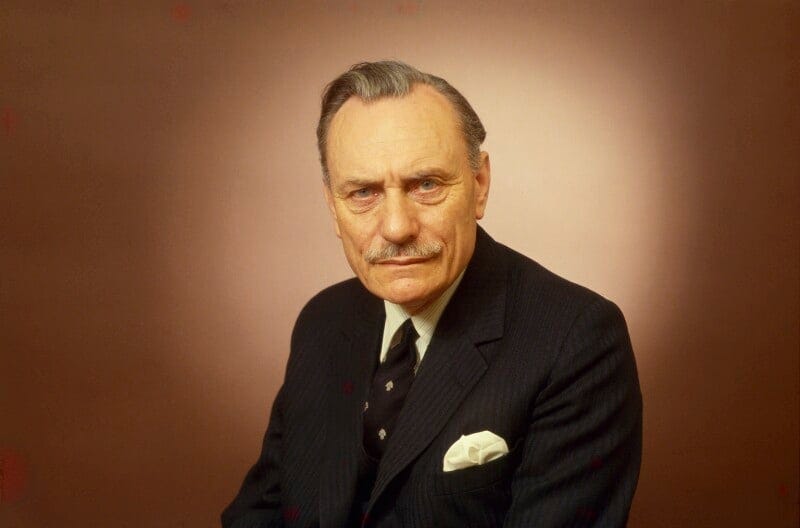
Enoch Powell was despised by the establishment but loved by ordinary British people. Powell was expressing something a large part of the British population felt but had no other voice for.
The establishment’s response was to declare him wrong, and by extension of that, to declare the British people wrong. In an elected representative democracy that is a perverse position to take. It is also exactly where we are again today on immigration, and a dozen other issues besides.
Why does this keep happening? Why are the British people so persistently at odds with those who govern them?
The answer, I think, has its roots in our deep history.
Before the Industrial Revolution Britain was an agrarian society. Wealth came from land. The British people were farmers, tenants on estates, subject to landowners, to the church, to the gentry. Authority came from above. The Industrial Revolution arrived and moved those same people off the land and into factories. The estate became the mill. The landlord became the factory owner. The fundamental relationship did not change. You were still subject to a higher authority. You were still dependent. The power structure did not change.
The Jewish diaspora in Europe, excluded from land ownership, excluded from most professions, subject to a harsher and more unpredictable authority than anything the British tenant farmer faced, developed an independent agency: financial networks, family connections across borders and commercial sophistication. Not because they were inherently different but because their survival depended on it.
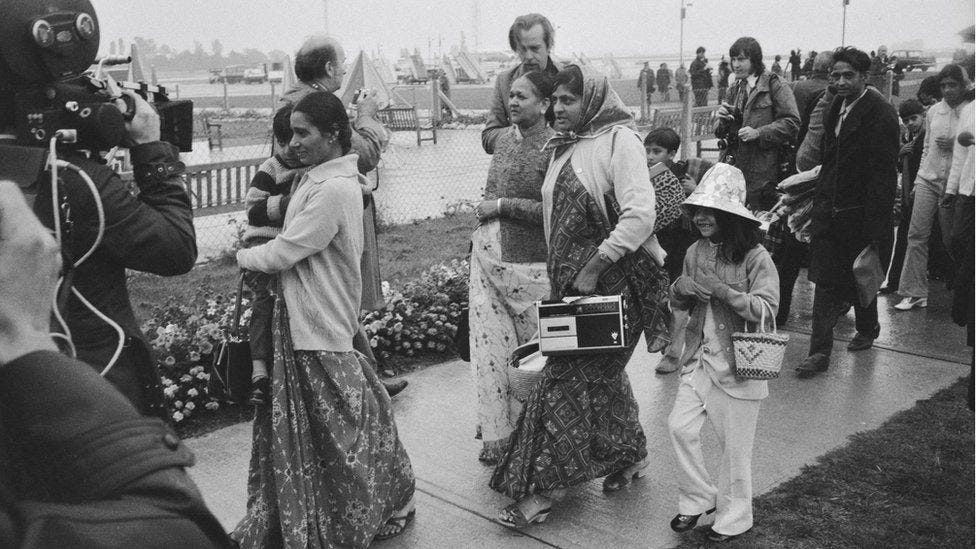
Consider the Ugandan Asians expelled by Idi Amin in 1972. They arrived in Britain with nothing. Within a generation, they achieved disproportionate success by almost any measure. They carried agency with them. Cultural agency.
Or take Germany before its 1871 unification. There were hundreds of small, fragmented political units — dukedoms, duchies, principalities etc. — but no single centralised power. Highly competitive, such states traded, negotiated, outdid each other in local civic life. It bred a commercial and civic competence that a centralised island nation like Britain simply never needed to develop.
By contrast, Britain had centralised early and thoroughly. There was never a period of fragmented self-reliance. The enclosure of common land accelerated dependency. And then just enough reform to assuage the grumbles — the Reform Acts, the welfare state, the NHS — was conceded at each pressure point to keep the lid on, without ever resolving the underlying condition. Not by conspiracy. The establishment, the ruling classes, did not need to conspire. They instinctively conceded the minimum demands necessary to maintain stability.
The result is a large class of British people who have carried a culture of dependency across centuries and into the modern day. That culture is now self-sustaining. There is a pride in it. A disdain for education and self-improvement framed as working class authenticity and pride. The romanticisation of being downtrodden. Marx did not help — he gave the dispossessed an identity rooted in their oppression rather than a route out of it. Class consciousness as destination rather than starting point.
Meanwhile Britain’s urban intellectual class — academia, the BBC, the civil service, the NGOs — are themselves a dependency class, just a more comfortable one. Their livelihoods are bound to the state. Their instinct is to defend its worldview and its status. And they look at the working class anxiety about immigration, about cultural erosion, about being left behind, and they see racism or ignorance rather than what it largely is: the entirely rational frustration of people who have never been given the tools to respond to change with agency. They are farmers still.
The British people’s support for Powell was not really about race at all, nor about immigration. It was a class of people with no agency feeling the world shift beneath them, and without the means to change themselves. The world for every German changed beyond recognition many times in the 20th century, but they adapted. They had sufficient agency to do so. British Jews and Asians would also adapt as times change.
The Germans, the Jews in any country, and Asians — especially the Sikh and Gujarati communities — have always had agency. The British people, or a large part of them, have not.
This is a product of our history and a failure of our leadership.