Civilisation.
We've never had it so good.

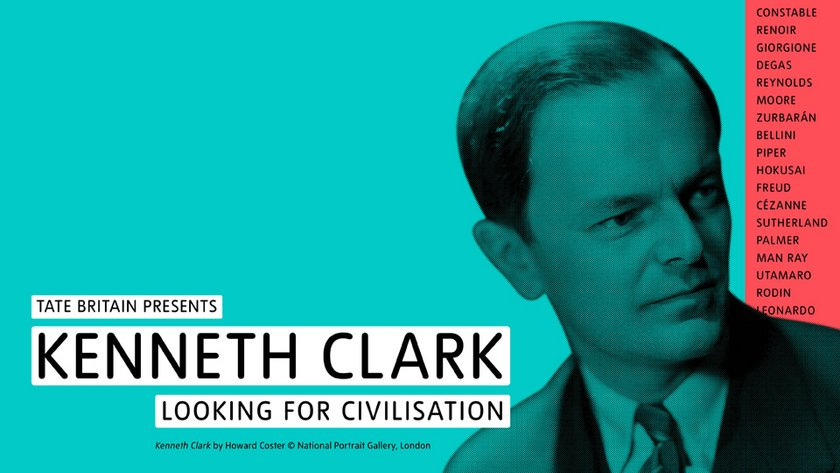
Kenneth Clark opens his TV Series Civilisation with a confession.
“What is civilisation? I don’t know. I can’t define it in abstract terms — yet.”
He then turns to face Notre Dame Cathedral and says that he knows it when he sees it. He spends the rest of the book pointing at various aspects and artefacts of civilisation.
It is an honest answer. The camera can do what language cannot. It points without translating, and translation always loses something. Clark understood that the particular: a flying buttress here; a shaft of light there, through a clerestory; the gravity of Chartres on a winter morning; carries the argument better than any words could. So he laid out his evidence and trusted the viewer.
But the question remains. What is civilisation, in abstract terms? Clark deferred. Here is my attempt to answer it.
Thomas Hobbes, writing in the middle of the seventeenth century, gave us a base:
“Without society, without the civilising contract, human life is solitary, poor, nasty, brutish and short. The war of all against all. Every man an enemy to every man.”
Hobbes was describing something real. Go back further than his century, back to the beginning, to the creature we were before we were anything else. The scavenger on the forest floor. Foraging, competing, dying young. Cognitively the same as us, the same brain, the same gaussian distribution of aptitude and temperament, the same capacity for everything we have since become. That creature is my starting point.
We have been civilising ourselves ever since - the moment when someone decorated a pot they didn’t need to decorate, or carved a figure for reasons that had nothing to do with staying alive, or finding food, or began using gestures and noises to communicate.
This was reaching beyond pure utility and necessity. The will to agency and the reduction of passivity.
What distinguishes civilisation from mere accident is intention. The cathedral reaches. So does a theorem, a symphony, a code of law, cultural courtesies developed to protect the stranger and reciprocally oneself if ever a strager.
Some of this was indeed accidental. Not everything was intended. Evolution in its cultural form moves by the same mechanism as the biological kind; most mutations fail, dead ends proliferate, there is no plan. The best things were often stumbled upon, then recognised, then kept. The accident noticed and preserved is itself a civilised act.
Which brings me, finally, to my abstract definition.
Civilisation is anything - material and non-material - we do, think, create, or make that lifts us from the scavenger on the forest floor.
It encompasses the road and the aqueduct, the hospital and the legal code, the illuminated manuscript and the equations of general relativity. It includes the decorated pot and the flying buttress and the Ode to Joy. It admits the accidental alongside the intentional.
The only criterion is the reaching. The distance, however small, from the brutal and squalid baseline Hobbes described. Each act of genuine courtesy, the open palm, the averted gaze, when ancient transhumance tribesmen met on the Steppe, is civilisation, because it chooses the difficult thing over the easy thing, the human over the animal.
Clark stood in front of Notre Dame and knew civilisation when he saw it. My definition is simpler than he had me believing. It is the distance, in any direction, from the forest floor. We have been travelling it for a very long time, and we are not going back.
Fine writing.